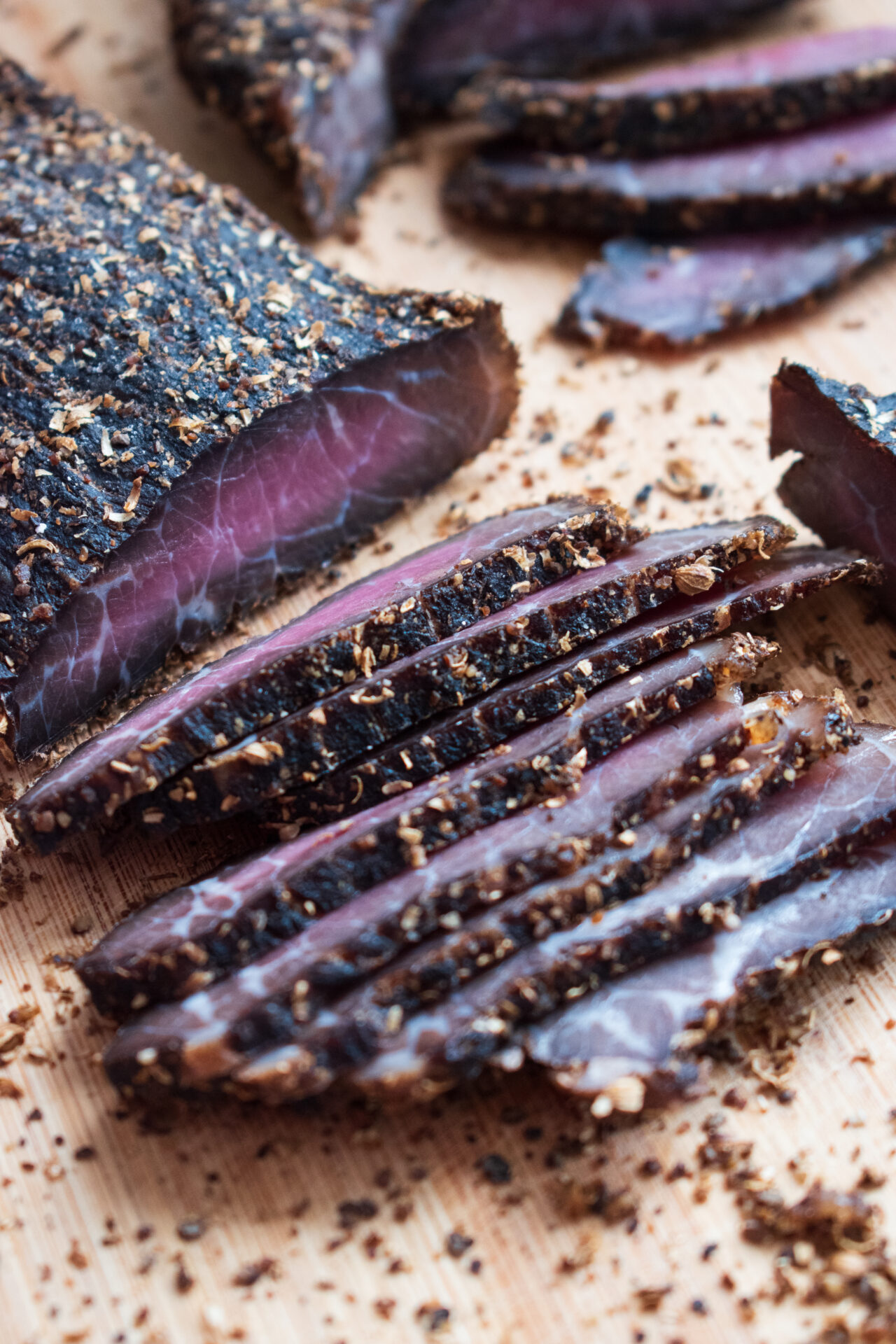
South African Biltong
A basic but seriously tasty biltong recipe. Biltong is air-cured cuts of meat, specifically silverside, that have been seasoned with a spice mix - perfect for snacking.
Print
Pin
Equipment
- Plastic hooks to hang the cured meat
- labels to note weight
- spice grinder or pestle and mortar
Ingredients
- 1.5 kilograms silverside c-grade beef see notes
- 45 grams coriander seeds toasted
- 45 grams black peppercorns
- 25 grams chili flakes optional
- 45 grams sugar or honey
- 45 grams course salt see notes
- 90 grams brown (malt) vinegar or cider vinegar
- 90 grams Worcestershire sauce
Instructions
- Start by toasting the coriander seeds in a dry pan. Add the toasted coriander seeds and black peppercorns to a spice blender or in a pestle and mortar. It should be mostly powder, with a few pieces of seed shells left in.
- Using a sharp knife, following the grain of the meat, cut into 1 inch (2.5cm) thick lengths.
- Pour the vinegar and Worcestershire sauce into a large marinading dish. Add the sectioned meat and coat with the vinegar mixture. Sprinkle half the spice mixture over the meat. Rub everything in thoroughly whilst turning the meat with your hands. Add the remaining spice mix and repeat.
- Cover the container and let your biltong cure for 24 hours in the fridge, turning and rubbing through the meat occasionally.
- Remove the meat from the container and pat dry with kitchen towels, taking care not to remove too much of the spice. Weigh each cut of meat, add a hook to the thickest part of the cut and stick a label on each hook. The label helps you know how much moisture loss has occurred. I prefer no less that 50% water loss otherwise it's too dry for me. So I usually start checking around 65%. For example: write the starting weight (S) 140g grams and the target weight (T) (no less than 50% moisture loss) 70g grams. So anything between 50% and 65% dryness is perfect for me.
- Hang in your biltong box, or in a well aired, ventilated space with a fan blowing gently to increase air flow but don't point a fan directly at the meat as this will cause case hardening. Make sure none of the pieces are touching. You can spread some newspaper below the meat to catch any liquid.
- Drying times will vary with humidity, airflow and temperature. I dried the meat for 5 days and most pieces were ready. The thicker cuts were left to dry further. You can test the readiness of your biltong every couple of days by squeezing the sides together with clean fingers. If you feel any give in the meat, it’s still ‘wet’ inside. It can take anywhere from 4-10 days to air-cure. Be ruthless with any signs of molding - dab a kitchen towel in some vinegar to neutralize any mold and increase the air flow.
- Once you've reached your preferred dryness you can slice away - enjoy!
Video
Notes
- Beef: try your best to use grass-fed c-grade silverside beef as this will yield the best results. Otherwise, a-grade/b-grade is perfectly fine or other cuts such as topside or sirloin etc.
- Seasonings: feel free to add any additional spices such as chili flakes, crushed aniseed etc. If you don't have any course salt and need to substitute with table salt, double check that it's not iodated salt as it'll leave a bitter taste in your mouth. Make sure to use 1/3 less salt if you're using fine salt as you don't want the cured meat to be too salty.
- Mold: check for mold at least once per day. Dab a kitchen cloth in some vinegar and neutralize the affected area immediately. Also, adjust the airflow. Mold will only grow if the environment is too humid.
- Storage: I prefer freezing my biltong, it thaws very quickly and makes slicing easier. It also stays fresher for longer. Otherwise, I'd keep the cut up pieces in a brown bag in the fridge for no longer than 5 days. Naturally, biltong will continue to dry out as time goes on so to prevent this I revert bake to freezing my biltong. No matter what happens, if the meat has a foul smell, colour or serious mold, then discard immediately.